Welcome to the Fit Fundraising podcast, where we bring you game changing fundraising topics direct from our meetings with major donors and nonprofits nationwide. We don’t interview consultants who haven’t met a donor in decades for fundraising stays on the front lines with nonprofit donors and leaders. This podcast is a glimpse into our work with nonprofits as we get on the field of them and successfully modeled fundraising.
Roy Jones
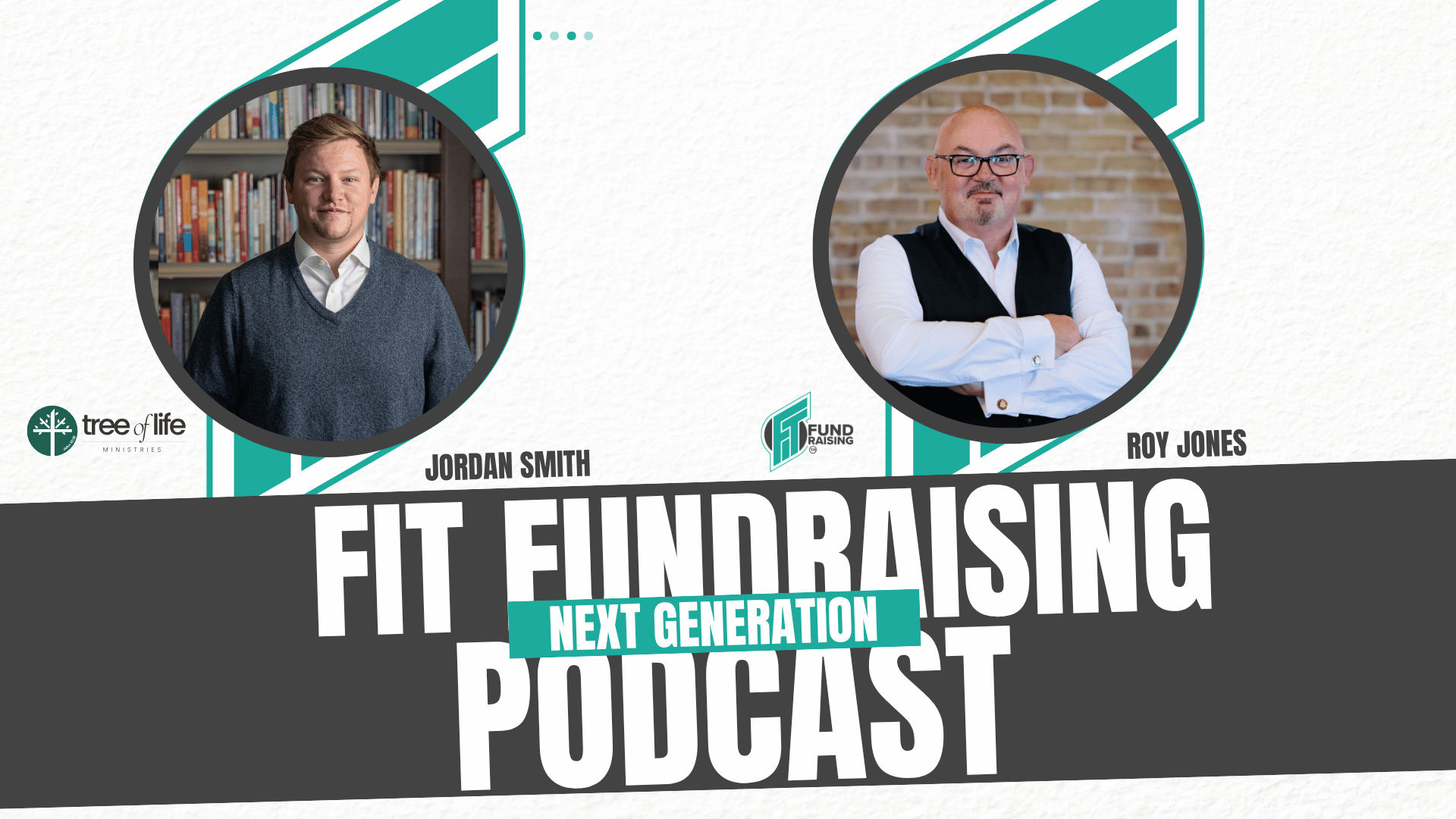
Welcome to the Fit Fundraising Podcast. I’m Roy Jones, and today we’re talking with one of the sharpest young leaders in fundraising and development. Our guest is my friend Jordan Smith, Executive Chief Development Officer at Tree of Life Ministries in Purcellville, Virginia, just outside Washington, D.C.
Jordan has an incredible background — sales, marketing, IT, extensive volunteer experience — and he brings an entrepreneurial energy to nonprofit development that you don’t often see. And yes, as an old boomer, it still amazes me to see a 35-year-old leading the way like this. Jordan, welcome to the show.
Jordan Smith
Good to see you, Roy. Thanks for having me.
Roy Jones
Let’s talk donors. You’re working across generations — older, middle-aged, and younger supporters. What differences are you noticing in how they communicate and how they give?
Jordan Smith
When I started six years ago, and especially once COVID hit, I realized quickly that people were online all the time — and that they were getting most of their information from social media. At the time, we only had around 700 followers total. It wasn’t much.
My first priority became: go where people are. So we invested time — not a lot of money — into consistently updating our community on what we’re doing, what the needs are, and how those needs are being met. Today we’re sitting around 13,000 to 14,000 followers across our channels. That engagement has created a community that knows we’re active, we care, and results are happening — and they want to be part of that.
Once we built that foundation, we started thinking about better, more creative ways to connect. We host 20-24 events and fundraisers a year because we want to meet people where they are. A great example is pickleball — it’s everywhere right now. So we hosted a pickleball tournament fundraiser. About 80 people showed up, and 55 of them were brand-new donors.
Roy Jones
What kind of age range did you see at that event?
Jordan Smith
Everything from early twenties to late fifties. It’s a great entry point for younger donors. I tell them all the time: don’t miss the blessing. Don’t miss the chance to be part of something meaningful happening right now.
Roy Jones
So you’re using social media to build awareness, then pulling people into real-world engagement through events.
Jordan Smith
Exactly. After COVID, people wanted to be face-to-face again. It’s become a balanced approach for us. But events aren’t the only tool — we use email, texting, volunteer engagement, and most importantly, intentional relationship-building.
We take the new-donor experience very seriously. While some organizations segment donors into tiers, we’re still a small development team, so we treat every donor with the same level of respect and intentionality.
One of the most important things we do is ask donors: Why did you give? We want to understand their motivation. And when we meet with them, we always ask, How can we pray for you? In our office, we have a board divided into “Please” and “Thank You.” We put donor prayer requests under “Please” and move them to “Thank You” when God answers. When we check back in later and ask about those requests, donors are moved. They realize we didn’t just take their gift — we cared about them.
Roy Jones
Do you find that boomers are more likely to sit down for meetings than younger generations?
Jordan Smith
Absolutely. Boomers still want to meet for coffee or come into the office. Younger generations tend to be busier, always on their phones, and harder to get face-to-face. That’s one reason events are so strategic for us — they open the door to deeper conversations afterward.
Roy Jones
Your storytelling is strong. How do you translate that into social media? Video? Photos? Written updates?
Jordan Smith
All of the above. We use a consistent rhythm: volunteer spotlights, donor spotlights, ministry highlights. We also have a dedicated Messenger thread with key team members to collect photos, videos, and stories every week.
We try to attend every ministry event and capture at least one strong visual. Once the content is uploaded, our communications team can schedule posts. But we’re also careful not to over-post — if something becomes repetitive or boring, we pause and rethink. People want to see people online, and they want to see stories of needs being met.
Roy Jones
Are you tailoring messaging by generation? Older donors love direct mail and reading. Younger donors skim.
Jordan Smith
We’re experimenting across all channels. Direct mail absolutely performs well with older donors. We’d only done one professional mailing before, and it was expensive. So we tried one in-house — and we got about an 18% response rate, which shocked us.
At the same time, we’ve added texting as a tool for younger supporters. Texts usually include a short message and sometimes a picture or link. And we’re intentional — we only text donors about six times a year. No one wants to be overwhelmed, and we respect that.
Roy Jones
Walk me through your communication plan. How do you structure outreach across channels?
Jordan Smith
We have a strong communications team and clear KPIs for the year. For example, we set a target percentage for social media growth, and we track that month by month.
One of our most successful tools is our monthly newsletter. It includes photos, stories, updates, and ways to get involved. Our donors genuinely read it, so we recently ran a small campaign to grow that email list. As that list grows, awareness grows — and giving follows.
It’s about accountability, consistency, and doubling down on channels that are producing results.
Roy Jones
Jordan, this has been a fantastic conversation. Your leadership, your innovation, and your heart for donors are inspiring — especially for the Emerging Leaders group at Citygate. If listeners want to learn more or reach out, how can they do that?
Jordan Smith
They can email me at jsmith@tolministries.org, and our website is tolministries.org. I’d love to connect with anyone who has questions or wants to learn more.
Roy Jones
Jordan, thank you. And thank you to our listeners for joining the Fit Fundraising Podcast. Visit fitfundraising.com if you need help — last year we donated more than 400 hours of free fundraising counsel to nonprofits around the country, and every one of our current clients started with a free consultation.
If you need guidance, reach out. fitfundraising.com.
Thanks for joining us — we’ll see you next time.
Thanks so much for listening to the FIT Fundraising Podcast. Please make sure to subscribe on your favorite podcast app so you’ll be notified of future episodes. And as always, make sure to visit fitfundraising.com to get your fundraising program into shape.
- Follow Us: Facebook | LinkedIn
- Subscribe to the Fit Fundraising Podcast: Apple Podcasts | Spotify
- Visit our Website at fitfundraising.com