
In my work as a college research professor, I spend a lot of time reminding students that good research does not begin with answers. It begins with good questions. A good question considers the existing information in context and seeks to expand our understanding. A great question takes us one step further. It challenges what we assume we already know and helps us uncover something we may have missed. It makes us curious enough to look more closely, listen more carefully, and allow what we learn to shape what we do next. I think the same is true in fundraising.
It is easy for nonprofit leaders to move quickly toward the question, “How much can we raise?” But before we get there, there are better questions to ask.
- What matters most to our donors?
- What are our partners responding to in our communication?
- Where are they already showing us interest, loyalty, or concern?
- How is our donor base likely to respond to our current leadership team?
- Do our donors currently feel appreciated and informed?
Those questions help us understand the people behind the gifts.
My work in nonprofit marketing has taught me that donors are constantly giving us information. They show us what stories they read, which emails they open, what programs they respond to, how often they give, and when they choose to engage more deeply.
The challenge is making sure we are paying attention.
That is why I believe some of the best fundraising decisions come from slowing down long enough to ask better questions before choosing the next tactic.
- Before planning another appeal, ask what your donors have already told you.
- Before deciding who should receive more attention, look for patterns in their engagement and giving.
- Before assuming you know what motivates a donor, give them the opportunity to tell you.
Research works best when we stay curious. Fundraising does too.
The goal is not simply to collect more information or add another data point to a spreadsheet. Teams can keep themselves busy for days, weeks, and even months adding data that may or may not contribute to moving programs forward.
The real goal is to understand the people behind the giving. What matters to them? What keeps them connected to your organization? What makes them feel seen, valued, and confident that their support is making a difference?
That kind of understanding requires curiosity. Strong leaders stay open to learning, even when they have years of experience or feel confident they already know the answer. They are willing to ask one more question, listen a little longer, and notice when the information in front of them challenges an assumption. Curiosity keeps us from becoming too comfortable with the way we have always done things.
When we lead that way, our communication becomes more thoughtful and our decisions become more informed. Over time, what might have started as a single gift has the opportunity to grow into a relationship built on trust, shared purpose, and genuine connection.
Fit Fundraising works with nonprofits, large and small, in human services, international relief, advocacy and education. Founder Roy Jones has helped raise more than half a billion dollars over the last decade alone. Ready to elevate your fundraising efforts to new heights? Discover how Fit Fundraising can transform your results. You can reach Roy at rjones@fitfundraising.com.
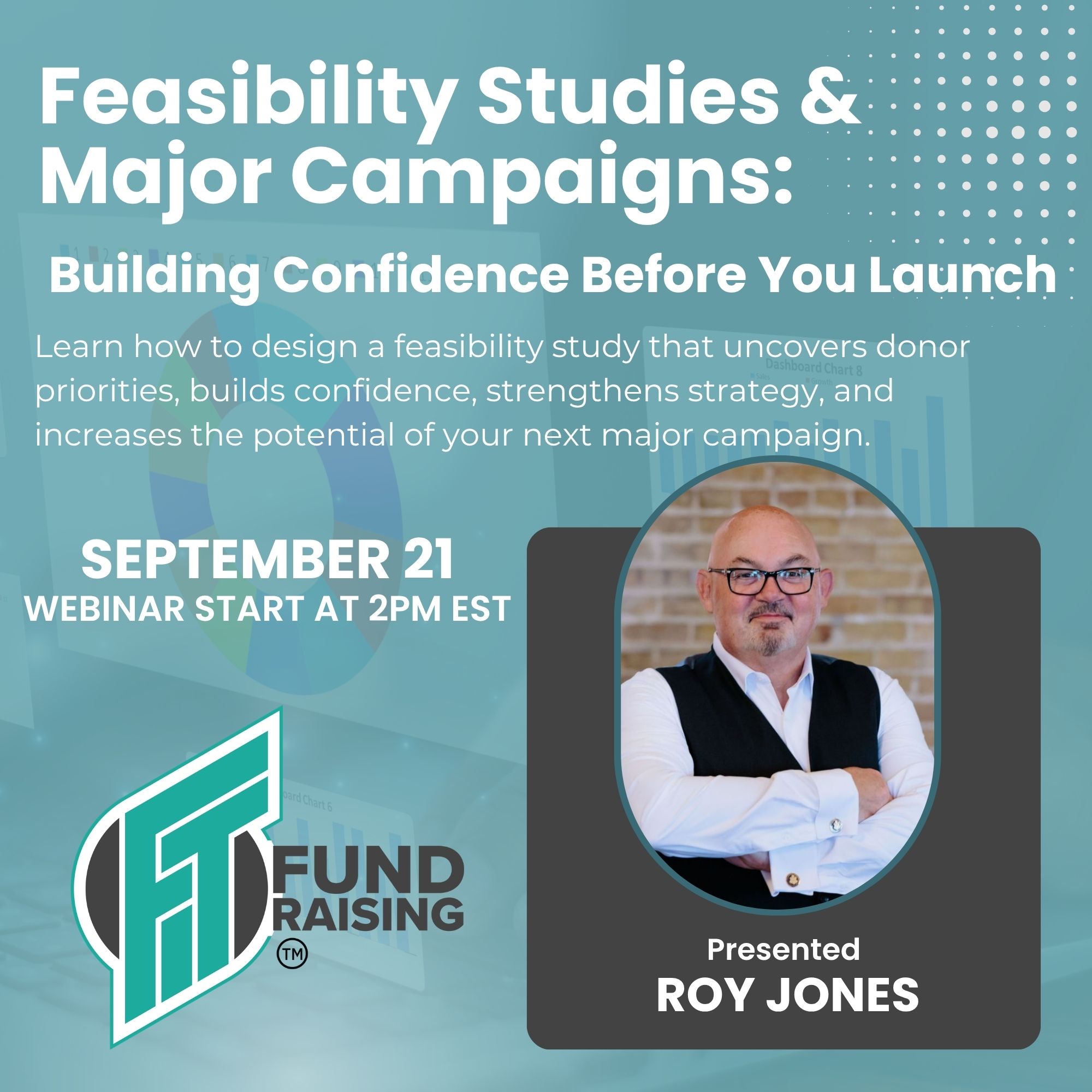
Feasibility Studies & Major Campaigns
Learn how a feasibility study can uncover donor priorities, strengthen strategy, build confidence, and increase the potential of your next major campaign.
Register Free →